Flexible printed circuit boards
Foil coating system for single or double-sided copper metallization
Application
Smartphones and other mobile electronics not only have to be powerful, but also very light and small. However, wiring carriers that connect all the sensors, microphones, cameras, loudspeakers and computing units together in the smallest of spaces are still necessary. These modern devices require printed circuit boards in the form of thin foils because they are small and light and also adapt to the geometries in the housing instead of dictating them. It must be possible to solder the components to the PCBs and these soldered connections and the adhesion of the conductor tracks to the foil must hold reliably even with the smallest structures.
Requirements for the system
The production system will coat the entire surface of up to 5 km long and 1600 mm wide films with a thickness of just 12.5 µm with copper using a roll-to-roll process. The galvanic reinforcement and structuring of the copper layer are downstream processes. The system must first remove residual water from the foil by heating the foil under vacuum. Then an adhesive layer must be applied, which must be free of chromium for environmental reasons. Finally comes the copper layer, which is over 100 nm thick. The system must be able to be evacuated again quickly after changing the film rolls in order to lose as little time as possible.
- Flexible and lightweight
- Reliable even with the smallest conductor tracks
- Soldering on the circuit board must be possible
Solution to the requirements
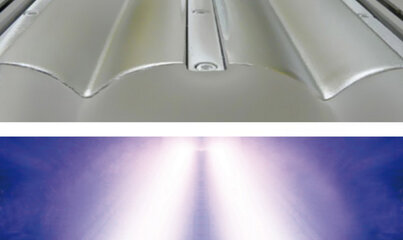
The FHR.Roll.1600 consists of separate chambers for unwinding, heating, coating and winding. The winding unit therefore remains in the process chamber, while the process units, namely tubular cathodes and heating plates, are moved out to the side on large carriages.
The special features of the FHR.Roll.1600
- Valve-separated winding chambers enable short times for substrate changes thanks to short pump-down times
- Foil drying within the system
- Highest material utilization and longest target service life thanks to the use of tubular cathodes
- FHR's own layering system
Our Project Cases
More Project Examples
-
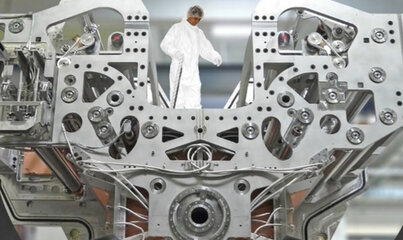 Solar cells on tarpaulins and on the move
Flexible CIGS solar cells - Production
Roll-to-roll production system for the deposition of CIGS solar cells on films
-
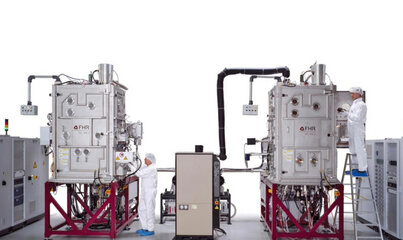 Solar cells on tarpaulins and on the move
Flexible CIGS solar cells - R&D
Roll-to-roll laboratory system for the deposition of CIGS solar cells on films