Atomlagenabscheidung
Konforme Schichten auf allen Geometrien
Die Atomlagenabscheidung (ALD) ist ein spezialisiertes zyklisches CVD-Verfahren, das für seine Fähigkeit bekannt ist, äußerst oberflächenkonforme Schichten mit beispielloser Präzision in der Schichtdicke abzuscheiden.
- Zyklisches CVD-Verfahren
- Ermöglicht oberflächenkonforme, präzise Schichtdicken
- Einsatz in der Halbleiterelektronik und Optik
Dank dieser einzigartigen Eigenschaften hat sich die ALD zu einem unverzichtbaren Instrument in der Halbleiterelektronik und Optik entwickelt. Insbesondere in Anwendungen, bei denen Kontrolle auf atomarer Ebene und gleichmäßige Abdeckung kritisch sind, bietet die ALD Lösungen, die mit herkömmlichen Abscheidungstechniken schwer zu erreichen wären.
Erfahren Sie mehr über diese zuverlässige und präzise Technik in der Dünnschichttechnologie.
How it Works
How atomic layer deposition works
Atomic layer deposition (ALD) is a technique for applying thinnest layers to surfaces. This process belongs to the family of CVD methods. In ALD, the layer is formed by repeated, cyclic reactions on the surface.
This method is mainly used in semiconductor electronics, for example to create special layers in certain transistors. However, the technique is also used in other areas such as the production of small mechanical systems, barrier coatings or optical coatings.
Unlike typical CVD processes, where the chemical reaction takes place everywhere in the room, with ALD the reaction only takes place directly on the surface. It is a step-by-step process: first, a substance is applied to the surface, where it reacts. Then this substance is removed and another substance is applied, which reacts there again. This is repeated until the desired layer thickness is achieved. The chamber is cleaned after each step. Only a very thin layer is deposited in each of these cycles. Thanks to ALD, uniform, very thin layers can be produced on complex surfaces. This is done at relatively low temperatures between 150°C and 400°C. Sometimes special techniques or materials are used to reduce the required temperature even further.
The main area of application was and is semiconductor electronics, for example the production of high-k gate layers in MOSFETs. However, the advantages of ALD technology are also increasingly being used in other sectors, including the production of MEMS, barrier layers, optical coatings or functional layers on particles or in capillaries.
Atomic layer deposition offers several advantages over other thin film deposition techniques:
- Atomic precision: ALD allows materials to be deposited layer by layer, resulting in accurate and controlled film thicknesses at the atomic level.
- Surface conformality: The ALD process ensures excellent coverage, even on textured or highly topographical surfaces, resulting in uniform and homogeneous films.
- Low processing temperature: Many ALD processes can be performed at temperatures lower than other CVD processes, making them suitable for temperature-sensitive substrates.
- Wide material selection: ALD can be used on a variety of materials, including metals, oxides and nitrides, making it versatile for a wide range of applications.
- High quality and purity: Thanks to ALD's sequential process, high-purity coatings are produced with minimal defects or impurities.
- Scalability for industrial applications: Despite its atomic precision, ALD can be efficiently scaled to be used in industrial production environments, especially in semiconductor electronics.
Due to these properties, ALD has established itself as a key process in many areas of materials science and technology.
FHR designs and builds ALD coating systems according to the specific requirements of our customers. From the configuration of the chamber to the heating and cooling methods, everything can be customized. The range includes platforms for 100, 150 and 300 millimeters as well as ALD modules for integration into cluster systems. Special systems based on ALD technology are also possible.
Vacuum coating systems
Discover how our vacuum coating systems are the foundation for high-performance coatings in numerous industries and how our technologies can be applied to your projects.
There is also
Other technologies and coating processes
-
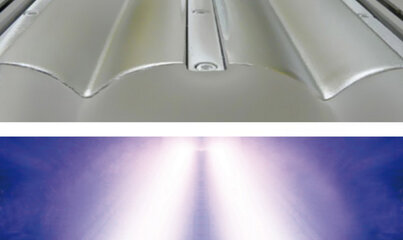 Sputter technology
Magnetron sputtering
Strong magnetic fields enable uniform and high-quality layer formation.
-
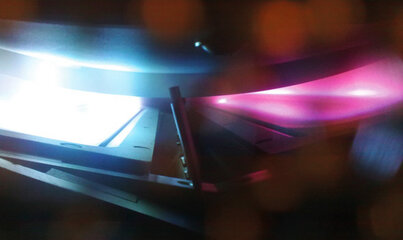 Sputter technology
Co-sputtering
Production of flexibly adjustable mixed layers with varying compositions.
-
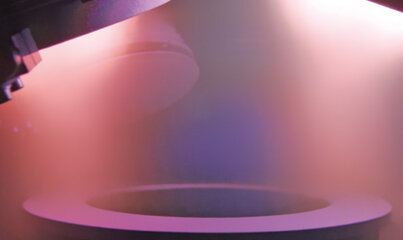 Sputter technology
Confocal sputtering
Use of up to five different materials in a single chamber for high flexibility and customized layer composition.
-
 Other coating processes
PVD coating
Vaporization of solid targets in the process chamber - is used, for example, in the semiconductor industry, the optical industry or in architecture.
-
 Other coating processes
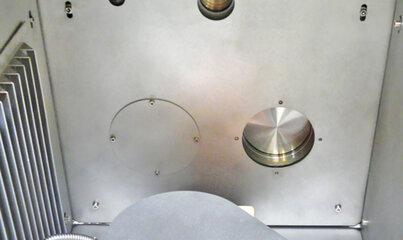
Thermal evaporation
Suitable for applying materials such as copper, silver or gold, but also other materials such as silicon dioxide or indium tin oxide.
-
 Other coating processes
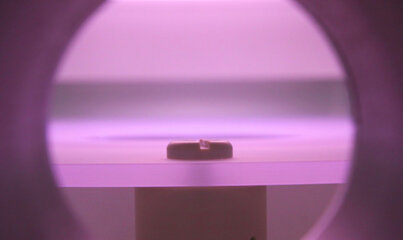
PECVD coating
Coating process for coating at low temperatures between 200°C and 500°C.
-
 Other coating processes
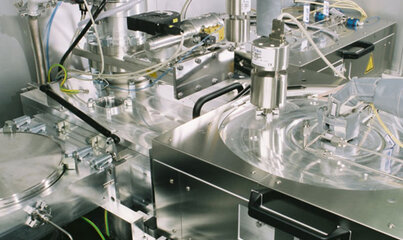
ALD & SALD
ALD can be used to produce uniform, very thin layers on complex surfaces at low temperatures.
-
 Layer structuring
Plasma etching
Plasma is used to remove materials from a substrate with extraordinary precision.
-
 Layer structuring
Reactive etching
With the ability to perform both isotropic and anisotropic etching, reactive ion etching offers a high degree of flexibility in the structuring of surfaces.
-
 Functional layers
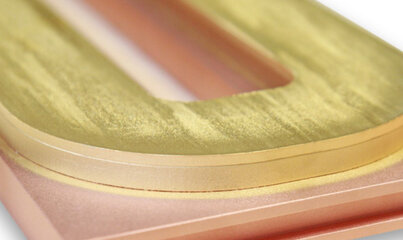
Optical coatings
Coatings for mirroring and anti-reflective coating of optical surfaces.
-
 Functional layers
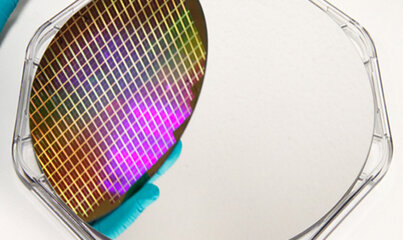
Electronic coatings
Electronic layers with different characteristics.
-
 Functional layers
Antireflective coatings
Anti-reflective, dielectric layers for anti-reflective coating of glass surfaces.
-
 Functional layers
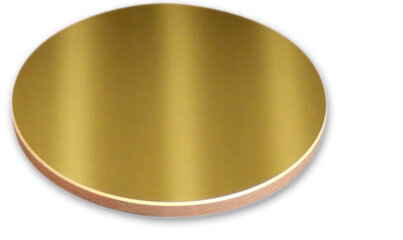
Decorative coatings
Coatings for finishing materials.
-
 Functional layers
Tribological coatings
Coating for adhesion and friction reduction or for abrasion and wear protection.
Darum sollten Sie mit uns arbeiten
Gemeinsam in die Zukunft der Beschichtung mit FHR:
- Branchenführende Qualität: Unsere Vakuumbeschichtungsanlagen sind auf höchste Präzision und Langlebigkeit ausgelegt.
- Maßgeschneiderte Lösungen: Wir bieten individuelle Lösungen für Ihr Beschichtungsprojekt, um Ihren speziellen Anforderungen gerecht zu werden.
- Innovative Ansätze: Mit unserer langjährigen Erfahrung und Expertise bei der Vakuumbeschichtung setzen wir neue Standards.
- Engagierter Kundenservice: Unser erfahrenes Team steht Ihnen jederzeit zur Verfügung, um Ihre Fragen zu beantworten und Sie bei Ihren Projekten zu unterstützen.
Entdecken Sie die vielfältigen Möglichkeiten, die unsere Vakuumbeschichtungsstechnik bietet und vertrauen Sie auf FHR als Ihren zuverlässigen Partner für herausragende Beschichtungslösungen. Kontaktieren Sie uns, um mehr zu erfahren und gemeinsam Ihre visionären Projekte zu realisieren.
Ihr Ansprechpartner
Sie haben Fragen?
Sie wollen mehr über Dünnschichttechnologie erfahren oder sich ganz allgemein zu unseren Vakuumbeschichtungsanlagen und unserem Beschichtungsservice beraten lassen? Dann melden Sie sich bei uns – unser Experten-Team beantwortet gerne all Ihre Fragen.