Plasmaunterstützte chemische Gasphasenabscheidung
Beschichtungen in der Halbleiterindustrie und Photovoltaik
Die plasmaunterstützte chemische Gasphasenabscheidung, oft einfach als PECVD bezeichnet, stellt ein zyklisches CVD-Verfahren dar, welches sich durch seine besondere Fähigkeit auszeichnet, oberflächenkonforme Schichten mit hoher Präzision in ihrer Dicke abzuscheiden.
- Ermöglicht Beschichtungen bei niedriger Temperatur
- Geeignet für temperatursensible Substrate wie Kunststoff
- Komplexe Bauteilbeschichtung möglich
Erfahren Sie mehr über diese zuverlässige und präzise Technik in der Dünnschichttechnologie.
How it Works
What is behind plasma-enhanced chemical vapor deposition?
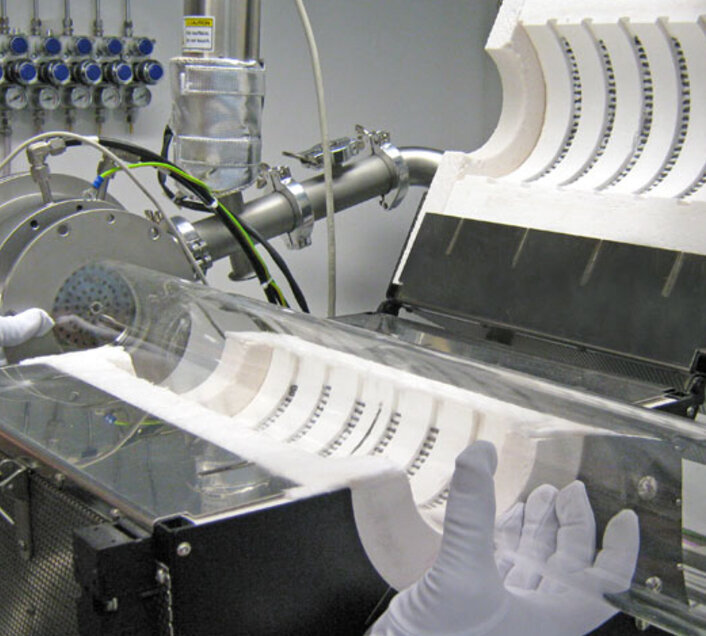
In plasma-enhanced chemical vapor deposition, or PECVD for short, plasma is used to support a chemical reaction. The advantage of this method is that lower temperatures between 200°C and 500°C can be used, which is particularly gentle on the material to which the coating is applied.
In the direct plasma method, the plasma can be ignited directly next to the material. However, this method carries the risk of damaging sensitive materials such as semiconductor wafers. For this reason, the remote plasma method is often used, in which the plasma is spatially separated from the material - a barrier protects the substrate from damage and also enables the selective excitation of individual components of the process gas mixture. With this method, however, it is important to ensure that the chemical reaction only takes place when the activated particles reach the surface of the material.
These "low-temperature CVD" processes are often used when the substrate to which the coating is applied cannot withstand high temperatures. For example, they can be used to apply thin layers to plastic films. This method is also often used in the semiconductor industry. One reason for this is that high temperatures can sometimes change the structure of the semiconductor. PECVD can also be used to deposit many different compounds that are required in microelectronics, such as amorphous silicon, silicon nitride or silicon oxide.
FHR's PECVD systems are customized and specially adapted to the respective process requirements. PECVD compartments are also frequently used to extend the technological range of sputtering systems. In any case, FHR impresses with competitive prices and excellent system quality.
Plasma-enhanced chemical vapor deposition (PECVD) offers various advantages:
- Surface conformality: PECVD enables the deposition of coatings that conform closely to the topology of the substrate, which is particularly important for textured or uneven surfaces.
- Low processing temperatures: By using plasma, PECVD can be performed at lower temperatures than traditional CVD processes, which is particularly beneficial for temperature-sensitive substrates.
- Versatility: PECVD can be used for a variety of materials, including dielectrics, semiconductors and metals, making it a flexible tool for different applications.
- High quality coatings: PECVD often produces dense, homogeneous and pinhole-free films, which are critical for many semiconductor and optical applications.
- Fine control over film properties: Using PECVD, the properties of the deposited films, such as thickness, refractive index and stress, can be precisely controlled by changing the process parameters.
- Environmental friendliness: Many PECVD processes use fewer toxic and hazardous chemicals than other deposition processes, resulting in a smaller environmental footprint.
Vacuum coating systems
Discover how our vacuum coating systems are the foundation for high-performance coatings in numerous industries and how our technologies can be applied to your projects.
How it Works
This is what chemical vapor deposition is all about
Chemical vapor deposition (CVD) is a well-known method for applying thin layers to materials. A material is heated and a chemical reaction creates a thin layer from the gas phase on this material. FHR offers special solutions for this type of coating, especially for wires and fibers, e.g. made of carbon or silicon carbide.
CVD coatings require high temperatures of at least 500°C and a high energy supply. A vacuum in the process chamber makes the process easier by reducing the boiling point for the transition of precursor substances into the gas phase and preventing unwanted chemical reactions.
One advantage of the CVD method compared to the PVD process, for example, is that it can evenly coat complex and three-dimensional surfaces. This makes it possible to create very fine structures on semiconductor wafers.
CVD coating requires special starting materials that contain all the necessary components for the desired coating. For example, ammonia and dichlorosilane are used as starting materials for a silicon nitride layer. Tin chloride or organotin compounds as well as oxygen or water vapor are used for thermal barrier coatings on glass made of tin oxide. Such tin oxide layers also protect container glass in bottling plants, for example, from damage caused by impacts and other mechanical effects.
As the condition of the substrate surface influences the growth of the coating, it is possible to grow metals selectively in certain sections of the surface - for example, only in electrically conductive areas, but not in insulating areas - if the process is designed accordingly. These possibilities for selective coating make CVD and PECVD particularly interesting for microelectronics.
There is also
Other technologies and coating processes
-
 Sputter technology
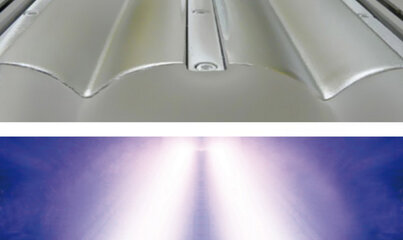
Magnetron sputtering
Strong magnetic fields enable uniform and high-quality layer formation.
-
 Sputter technology
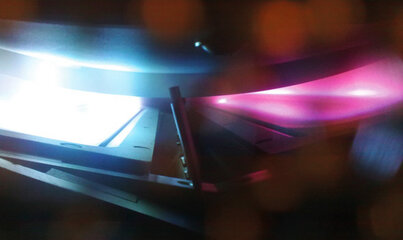
Co-sputtering
Production of flexibly adjustable mixed layers with varying compositions.
-
 Sputter technology
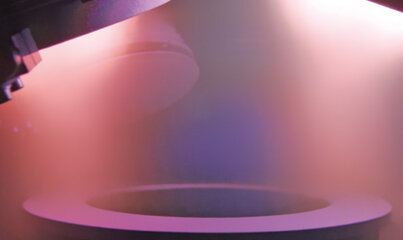
Confocal sputtering
Use of up to five different materials in a single chamber for high flexibility and customized layer composition.
-
 Other coating processes
PVD coating
Vaporization of solid targets in the process chamber - is used, for example, in the semiconductor industry, the optical industry or in architecture.
-
 Other coating processes
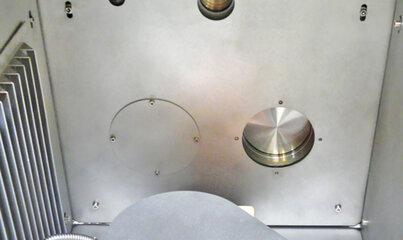
Thermal evaporation
Suitable for applying materials such as copper, silver or gold, but also other materials such as silicon dioxide or indium tin oxide.
-
 Other coating processes
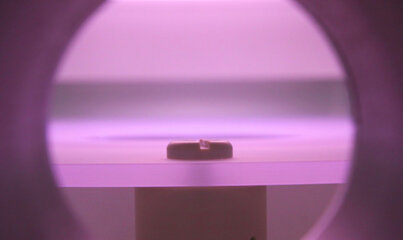
PECVD coating
Coating process for coating at low temperatures between 200°C and 500°C.
-
 Other coating processes
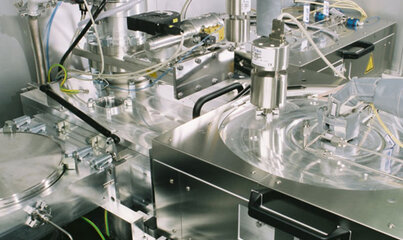
ALD & SALD
ALD can be used to produce uniform, very thin layers on complex surfaces at low temperatures.
-
 Layer structuring
Plasma etching
Plasma is used to remove materials from a substrate with extraordinary precision.
-
 Layer structuring
Reactive etching
With the ability to perform both isotropic and anisotropic etching, reactive ion etching offers a high degree of flexibility in the structuring of surfaces.
-
 Functional layers
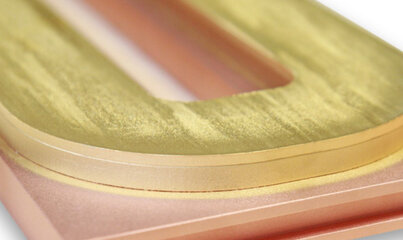
Optical coatings
Coatings for mirroring and anti-reflective coating of optical surfaces.
-
 Functional layers
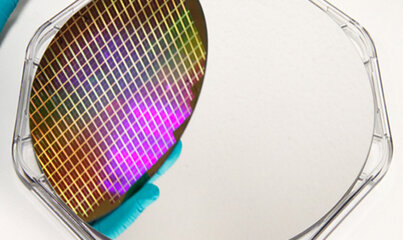
Electronic coatings
Electronic layers with different characteristics.
-
 Functional layers
Antireflective coatings
Anti-reflective, dielectric layers for anti-reflective coating of glass surfaces.
-
 Functional layers
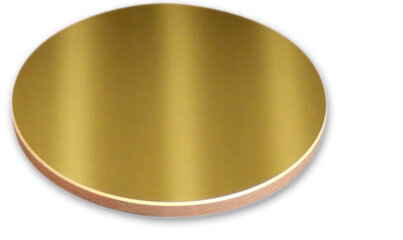
Decorative coatings
Coatings for finishing materials.
-
 Functional layers
Tribological coatings
Coating for adhesion and friction reduction or for abrasion and wear protection.
Darum sollten Sie mit uns arbeiten
Gemeinsam in die Zukunft der Beschichtung mit FHR:
- Branchenführende Qualität: Unsere Vakuumbeschichtungsanlagen sind auf höchste Präzision und Langlebigkeit ausgelegt.
- Maßgeschneiderte Lösungen: Wir bieten individuelle Lösungen für Ihr Beschichtungsprojekt, um Ihren speziellen Anforderungen gerecht zu werden.
- Innovative Ansätze: Mit unserer langjährigen Erfahrung und Expertise bei der Vakuumbeschichtung setzen wir neue Standards.
- Engagierter Kundenservice: Unser erfahrenes Team steht Ihnen jederzeit zur Verfügung, um Ihre Fragen zu beantworten und Sie bei Ihren Projekten zu unterstützen.
Entdecken Sie die vielfältigen Möglichkeiten, die unsere Vakuumbeschichtungsstechnik bietet und vertrauen Sie auf FHR als Ihren zuverlässigen Partner für herausragende Beschichtungslösungen. Kontaktieren Sie uns, um mehr zu erfahren und gemeinsam Ihre visionären Projekte zu realisieren.
Ihr Ansprechpartner
Sie haben Fragen?
Sie wollen mehr über Dünnschichttechnologie erfahren oder sich ganz allgemein zu unseren Vakuumbeschichtungsanlagen und unserem Beschichtungsservice beraten lassen? Dann melden Sie sich bei uns – unser Experten-Team beantwortet gerne all Ihre Fragen.